Esports in Indiana is growing, but for many families, students, and new players, one basic question is still harder to answer than it should be:
Where do I start?
That question is the reason we built the new IndyGG Camps section.
Across Indiana, schools, universities, coding programs, recreation centers, and youth organizations are already offering esports camps, game development camps, Minecraft programs, Fortnite design sessions, Rocket League camps, and competitive gaming opportunities. The problem is not that these programs do not exist. The problem is that they are scattered across dozens of websites, registration pages, school calendars, and social posts.
For parents, that means searching city by city. For students, that means missing opportunities they may have been interested in. For organizers, that means great programs can get buried simply because the right people never saw them.
The IndyGG Camps page is our first step toward fixing that.
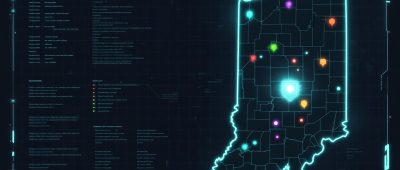
The new section currently highlights 25 active camps, covering 6 games, 17 cities across Indiana, and 15 organizers. It allows families to compare camps by season, age group, game, format, city, and schedule, while also browsing by week through a sessions calendar.
That matters because esports camps are not all the same. Some are competitive. Some are creative. Some are focused on coding or game design. Some are day camps for younger students, while others are overnight university camps for high school players exploring college esports environments.
On the same page, a parent can find Minecraft camps in Fishers or Brownsburg, game development programs using Scratch or Unreal Engine, esports camps at universities like Purdue, Butler, IU Bloomington, Trine, Ball State, Indiana Wesleyan, Valparaiso, Manchester, and Evansville, plus youth-focused programs through local schools and organizations.
That variety is the point.
For too long, esports has been treated like one thing. In reality, it is a pathway with many doors. A younger player might start with Minecraft or Scratch. A middle school student might discover Rocket League or Super Smash Bros. A high school player might attend a university camp and realize that college esports is a real option. Another student might care less about competition and more about game design, modding, streaming, production, or technology.
A good esports ecosystem needs all of that.
The Camps section is not just a list. It is part of a larger goal for IndyGG: building useful infrastructure for the Indiana esports community. News coverage is important, but discovery is just as important. If people cannot find the programs, events, teams, venues, and opportunities around them, the scene stays smaller than it should be.
This is especially important for parents. A lot of families are still learning what esports can be. They may not know which games are played competitively, which schools have programs, what age groups are appropriate, or whether gaming can connect to scholarships, technology, teamwork, communication, or future career paths. A clear directory helps lower that barrier.
It also helps organizers. Schools, camps, and community programs should not have to rely only on social media algorithms or word of mouth to reach families. If a program is serving Indiana players, it should be easier to find.
This first version is not the final version. IndyGG is still in early access, and the Camps section will continue to grow as more programs are added, verified, corrected, and expanded. The page already includes a submission callout for organizers who run camps and want to be listed.
Our goal is simple: make Indiana esports easier to discover.
If you are a parent looking for a summer camp, a student looking for a place to improve, a coach trying to connect players with opportunities, or an organizer running a program that deserves attention, this section was built for you.
Indiana esports is bigger than one tournament, one school, or one game. The Camps section is one more piece of the map.
And we are going to keep building it.